DC Motor

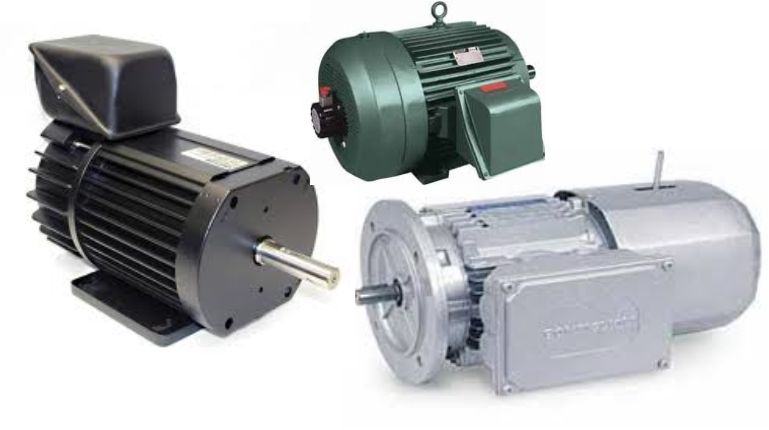
fig1The DC motor is an electro-mechanical energy converter which converts electrical energy received  from a DC source into mechanical energy that gives on to the shaft of a driven mechanism.
By the way the excitation is done, engines are classified in:

  • Motor with shunt excitation (parallel) – the stator winding and the rotor winding are connected in parallel to the same voltage source;
  • Motor with series excitation – the stator winding and the rotor winding are connected in series;
  • Motor with mixed excitation (compund) – stator armature presents two windings: one connected to the parallel rotor winding and other connected in series with it.

Constructive elements

Constructive, the DC motor is composed of an inductor and a induced, separated by an air gap called the air-gap. The inductor is fixed, constituting the machine stator and the armature is movable, representing the rotor machine.
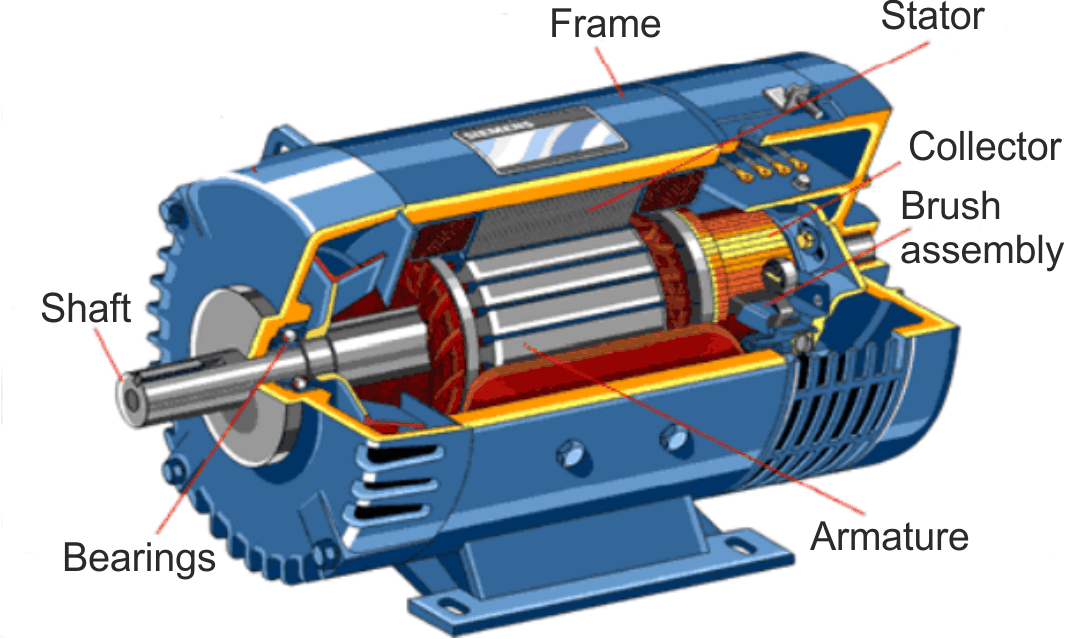
fig2The inductor is the component of the machine that produces the magnetic flux inductor. Is composed of: casing, main poles (excitation), auxiliary poles (switching) and clamping parts.

Main poles are formed from a ferromagnetic core. On the polar core, excitation coils are mounted made of insulated copper conductors with circular section for low powered machines and rectangular for high power machines.

Auxiliary poles consist of a core of solid iron (sometimes of laminations). The pole auxiliary coil is usually made from copper bar bent panels. Auxiliary poles are placed in the geometric neutral axis of the machine, midway between the main poles.

At the polar core outskirt, to the main air-gap a number of notches are practiced on which you place a special winding, called winding compensation.

The armature is composed of a ferromagnetic core, shaft, induced winding and collector. The ferromagnetic core is made of laminations of electrical steel 0.5 mm thick, insulated between each other in order to reduce eddy currents. Most commonly, the armature presents open slots to allow the introduction of pre-insulated coils.

The induced winding is made of copper conductor. The winding portion between two neighboring collector blades is called section. The ends of the section are connected to the collector blades.

The collector is a rotary mechanical rectifier, integral woth the armature of the machine and is made up of a number of blades (isolated from each other) to the trapezoidal shape made of the copper or copper alloy and silver.

Brushes step on the commutator blades, linking the armature circuit which is mobile and the external circuit is fixed.

The DC motor operation is defined by the starting, operation, speed  control and braking characteristics.

Starting methods

In practice the following  methods to start the DC motors are used:

  • Direct connection to the network;
  • Start with a starting rheostat;
  • Start with low voltage.

There are situations where it is possible to apply the latest methods combined.

Speed control

Assuming that the resistant torque value at the motor shaft is kept constant whe have the following possibilities of controling the speed:

  • By varying the excitation flux;
  • By varying armature voltage applied to the terminals (the voltage remains constant);
  • By varying the power supply voltage.

Applications
utilizare_en

New Prosthetic Grip Gives Hope to Amputees

Amputee Successfully Feels Prosthetic Grip Strength Via Arm Electrodes

A recent breakthrough in prosthetics could change the future for amputees.

While previous prosthetic devices allowed amputees to grab objects by responding to twitching muscles, amputees could not feel the objects or control the strength of their grip.  Now, scientists in Europe have developed a new method of surgically attaching electrodes directly to an amputee’s nerves, allowing the amputee to control grip strength and distinguish different shapes and stiffness of objects.

The scientific study, called Lifehand, was conducted by Swiss biomedical engineer Silvestro Micera, of the Swiss Federal Institute of Technology in Lausanne (EPFL), in cooperation with Scuola Superiore Sant’Anna (SSSA) in Italy.  The project built upon previous studies of several new methods of providing a better sense of control and touch for prosthetics used by amputees.  The Lifehand project used computer algorithms to take measurements of tension in artificial tendons and convert them into electrical currents.

Micera conducted the test on 36-year old volunteer, Dennis Aabo Sorenson, who lost his left hand in a firework accident 9 years ago.  Sorenson’s median and ulnar nerves were connected directly to a robotic hand, allowing him to control the prosthetic hand by using small muscle movements that were detected by electrical signals in his skin.  Sorenson was able to grasp objects using different strength grips, and was able to discern the shape and stiffness of various objects even while blindfolded and wearing noise-canceling headphones.  Sorenson completed the tests with 67 percent to 93 percent responsiveness.

Sorenson is the first amputee in the world to have sensory information in real-time.  A previous clinical trial was conducted in February 2013 with a prototype, and just one year later, Micera was able to perform the surgery to test the bionic arm on a real patient.

Sorenson reported that for the first time in 9 years, he could feel whether objects were hard or soft, round or square using the prosthetic hand.  Sorenson’s previous prosthetic hand did not allow for sensory touch or differentiating of objects’ hardness.  He described his previous limb as similar to using a brake on a motorbike – when he squeezed the brake, the hand closed, and when he relaxed, the hand opened.  He needed to watch the prosthetic to make sure he did not break objects.  The new prosthetic, in contrast, allowed Sorenson to feel the objects and control his touch.   The test is the first step in creating bionic limbs, although a sensory-enhanced prosthetic limb is still years away from being available for commercial use.

The prosthetic limb was removed from Sorenson’s arm after one month of testing due to safety concerns, but scientists predict that these types of prosthetic limbs could be used safely for many years on amputees in the future.

Sorenson described the test as incredible.  He has an optimistic outlook and was happy to participate in the trial to help himself and other amputees.  Now he faces the challenge of staying positive after feeling sensory touch for a short time and for the first time in 9 years.

Cyborgs from comic books to the real world

Cyborg Drumming

When you hear the term ‘cyborg’ or ‘cybernetics’, you probably thought of Cyborg the DC Comic Book superhero or maybe RoboCop or even Darth Vader. The vision of merging humans with robotic technology has been around for decades. Now those visions are becoming a reality.

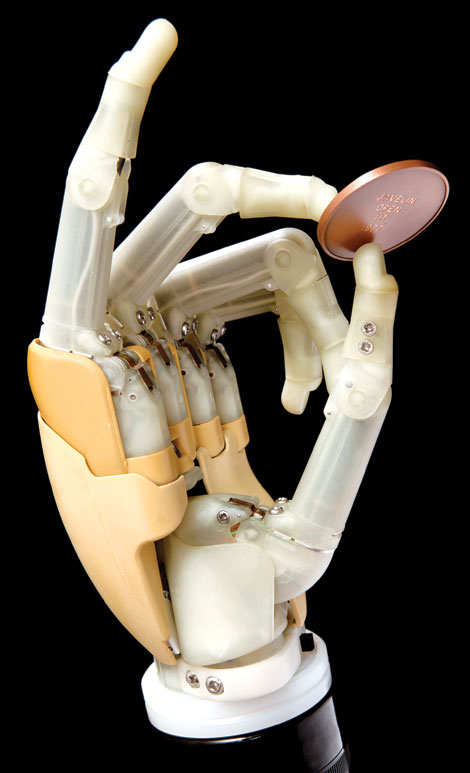
Prosthetic technology has come a long way in recent years. Amputees now have artificial limbs that can function almost as well as natural limbs. It’s amazing to see someone who’s able to tie a shoelace or open a can using artificial limbs that take their cues from existing muscles or just the thoughts of their user. There is even a technology that allows these artificial limbs to restore a sense of touch.

All of these technologies are allowing people to perform normal everyday tasks that have been difficult or required assistance before.

Now let’s take that a step further. What about not so everyday tasks like making music? Rick Allen the drummer for rock band Def Leppard lost his left arm on December 31, 1984 when he was involved in a car accident. He still plays with the band today, thanks to his determination, skill and a modified drum kit.

Today, it is not about modifying the instrument it’s about modifying the prosthetic.

Gil Weinberg a professor at Georgia Tech has created robots that can create music. That’s right, I said create not play. An iPod can play music, but it needs a robot to actually create music. By analyzing existing melodies these musically inclined robots can create new ones. They are on the point of their development where they can jam with human musicians.

So is it too much of a leap to think that Weinberg could create a prosthetic that could do the same?

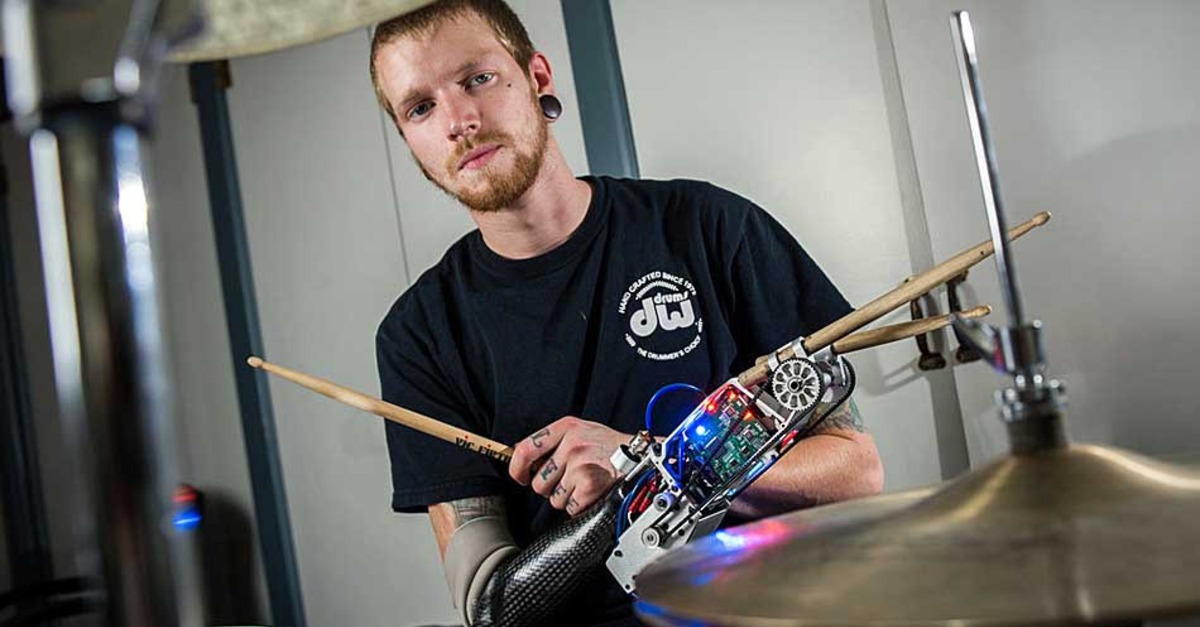
Jason Barnes lost his right arm just below the elbow a few years ago. In his effort to keep playing the drums he designed his own prosthetic. Unfortunately, what he created did not provide the necessary flexibility that a normal wrist and fingers would.

Weinberg then designed a cybernetic arm that takes its cues directly from Jason’s arm using electromyography (EMG) muscle sensors in his upper arm. This new arm has the desired sensitivity that allows for the flexibility a drummer needs to control his grip on the stick.

So Jason’s back on the drums and the story could very easily end here, but it does not.

Remember how Weinberg created robots that can actually create music? So instead of just being contented on giving Jason an arm he can use to play drums, he included a second stick on the arm.

That’s right. Jason’s prosthetic has an extra drumstick. This second drumstick has a mind of its own. It actually listens to what Jason is playing and then backs him up by accompanying him on its own. Jason can’t control what the second stick plays but if he wants to fly solo he can pull it away from the drums.

Weinberg’s ultimate goal is to be able to hook the arm directly to Jason’s brain so it can predict exactly when and whatever Jason wants to play. Then execute a pitch perfect beat.

He has made Jason the drummer of the future. With his robot arm he plays better than a drummer with two human arms, playing faster and with a steadier beat. Not quite Steve Austin but pretty close.

Weinberg’s vision for the future – giving humans who have all their limbs the advantage of an embedded third arm to help astronauts or surgeons with some of their more difficult and delicate tasks. Coming from him.. does not seem all together impossible.

Robotics- It isn’t exactly the Jetson

Immersive VR Enables Safe and Effective Control of Big Scary Robots

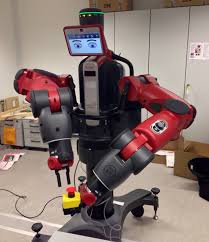
The time is actually upon us where robots are part of the work force. You have probably seen it somewhere, huge robotic arms helping to put together a car for example, but it is not like the future that was dreamed up back in the 50s and 60s. There is not a Rosie out there waiting for you to take her home to clean your house, fix your meals etc. It is not also workers on an assembly line side by side with their automated counterparts.

The challenge with these industrial robots is you should not be in the same room with them. Why? Because these huge metal goliaths of steel and circuitry could end up seriously injuring you or worse, just in the course of doing what they were programmed to do. This also means that if and when something goes wrong you have to power everything down so that you can safely go in and fix the problem causing a loss in productivity.

According to OSHA (Occupational Safety and Health Administration), most robot-related injuries actually occur during those non-routine conditions. When there is a need for someone to go in and fix an issue or do some reprogramming and while in the robot’s ‘personal space’ something unintended happens.

Now there is a solution to all of these: Immersive Virtual Robotics Environment (IVRE), developed at Johns Hopkins’ Computational and Interactive Robotics Laboratory. With funding from National Science Foundation National Robotics Initiative (NRI), researchers have been able to create a prototype that works with an industrial robot. The goal is to make working with robots more accessible to small businesses, allowing these business owners to easily program and work with the robot saving both time and money.

Simply speaking IVRE puts you in a virtual environment where you can interact with the robot without needing to be anywhere near it. This can be done either in real time via a virtual proxy or as a simulation.

What does this mean to the overall use of robots for industrial task? The benefits are actually twofold. It means that you can interact with a robot while it’s doing its job without being within ‘striking distance’. It also means that you can send a robot into an environment that a human would not necessarily want to go into or one that is not safe for humans while keeping a real-time eye on the situation without putting yourself in harm’s way.

Another feature beyond the virtual reality is augmented reality. The operator is not just interacting with the robot. They are also able to receive information about the robot’s environment and what exactly it is the robot is trying to accomplish.

This is just the tip of the iceberg. Imagine someone who does not have a Ph.D. in robotics being able to jump into a virtual world and have a robot perform a task just by showing it what they want it to do, again making this technology more for the masses.

The practical application of this technology hopefully is not too far off. Using Oculus Rift, Virtual Reality software developed by Palmer Luckey, the founder of Oculus VR, makes the technology commercially accessible.

So maybe a future of working side by side with our robotic coworkers is not too far off the mark.

Plants Can Tell They’re Hungry!

plant-water-alarm


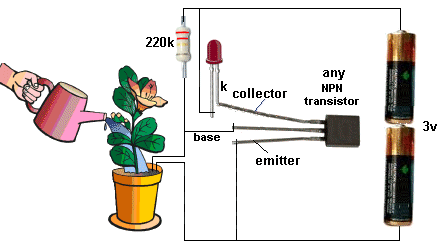
Do you constantly check if your plants need water already? Or do you always forget to water them? Well, this DIY project is for you.

It’s a simple circuit that will be triggered the moment the soil of your plant gets dry. The base resistor has a very high value and the transistor current is only two (2) milliamperes, therefore, the circuit does not have a current-limiting resistor. You can also replace the value of the resistor if you want to adjust the alarm sensitivity, to avoid annoyance.


[to be continued]